Gel, dip powder, and acrylic are the three systems behind most salon sets, and they are often described as if they were three brands of the same thing. They are not. They harden by different chemistry, wear differently, come off differently, and suit different nails. Gel is a resin cured with light. Dip is a powder bonded with a resin adhesive, layer by layer. Acrylic is a liquid and powder mixed at the table that hardens in air. If you are choosing in Kannapolis, this checklist walks the comparison in the order that matters: how it is built, how it behaves, how it leaves.
The system checklist
Compare gel, dip, and acrylic line by line
- How it hardens: Gel passes the control test: it stays workable until the lamp cures it, so shaping is precise. Dip builds in quick layers and sets as the activator is applied. Acrylic gives the technician a short working window before it sets in air, which rewards experience.
- Strength and feel: Acrylic is the hardest and most rigid, the traditional pick for long lengths and heavy use. Dip sits in the middle, firm with a substantial feel. Gel, including builder gel, has more flex, which many people find more natural and more forgiving of knocks.
- Length: All three can go over tips or forms for extensions. For strength on your own length, gel overlays are the common choice; acrylic and dip are chosen when added length or maximum hardness is the goal.
- Wear and fills: All three grow out at the cuticle and need maintenance on roughly a two to three week cycle. Gel and acrylic are typically filled and rebalanced; dip is more often fully removed and redone.
- Removal: Gel and dip soak off in acetone after the surface is broken. Acrylic also soaks off but takes longer. All three fail the same test if they are pried or peeled: forced removal strips natural nail layers, whichever system is on top.
- Smell and setting: Acrylic has the noticeable monomer smell during application. Dip involves fine powder in the air at the table. Gel has the least odor and the most lamp time.
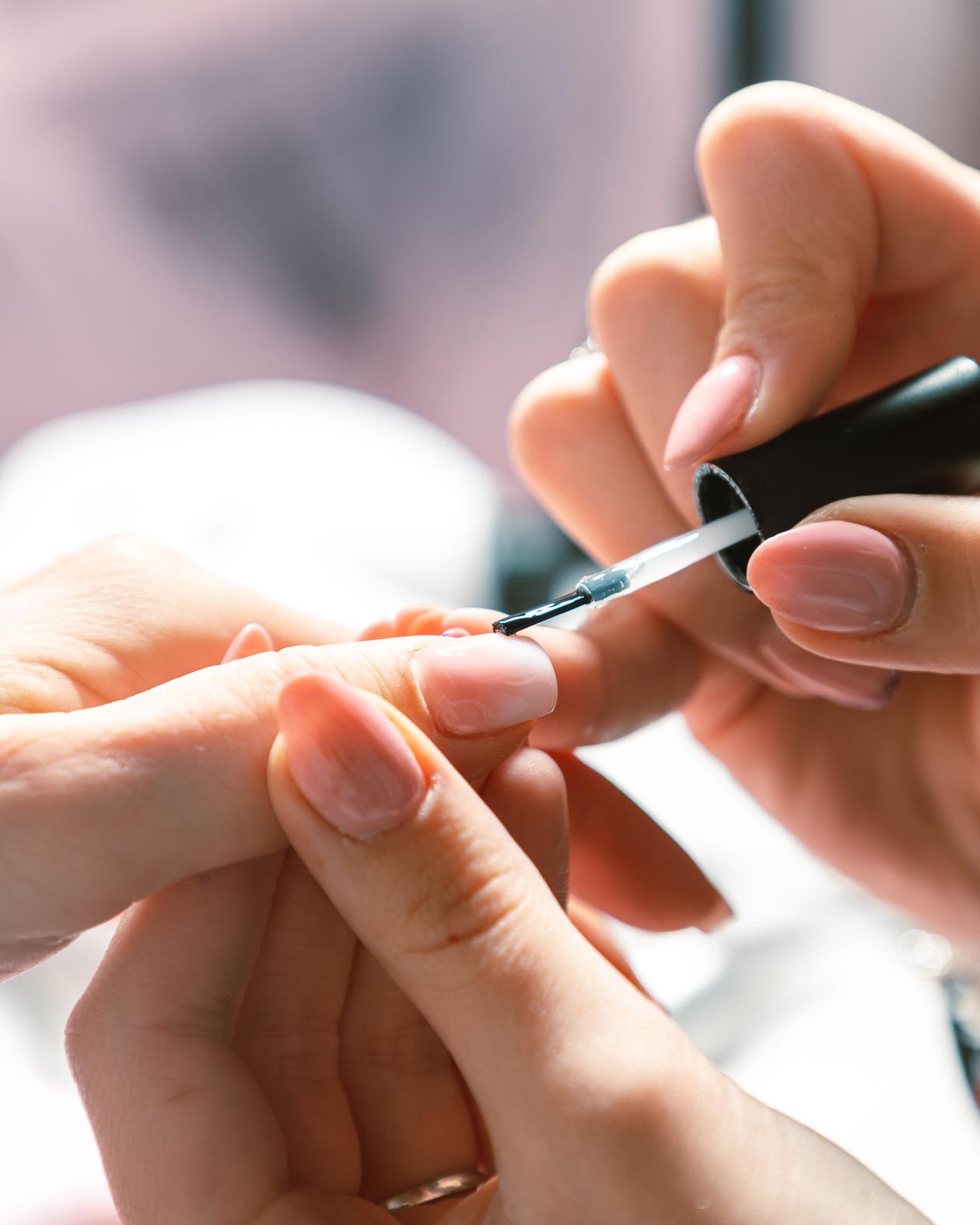
What the chemistry means for your nails
The health questions people bring to this choice are usually about the wrong suspect. Modern salon systems, properly applied and properly removed, sit on the nail rather than in it, and the plate underneath grows out on its own schedule. The damage stories trace back to three repeatable causes: aggressive filing of the natural nail during prep, forced removal at home, and wearing a lifted set until moisture and leverage do harm underneath. Those risks are shared by all three systems, which is why application and removal habits matter more than the label on the product.
There is one genuine individual variable: sensitivity. Some people react to uncured gel touching skin, which careful application avoids, and some dislike the weight of acrylic or the dust of dip. If your skin reacts around the nails after a set, say so at the next appointment, because switching systems is a normal response and technicians would rather switch than troubleshoot a recurring rash.
Choosing by your actual priorities
Choose gel if you want a natural feel, low odor, and strength over your own nails, and you are content with short to medium length. Choose dip if you like a firm, substantial nail, want color that is part of the powder itself, and accept a full removal and redo each cycle. Choose acrylic if you wear real length, work hard with your hands, and want the hardest structure, maintained with regular fills. At Sue's Nail Shop in Kannapolis, gel manicures, dip powder, and acrylic full sets are all regular services, so the choice can be made on fit rather than availability, and it can be revisited: many clients move between systems across a year as length and work change.
A note on doing any of this at home
Home kits exist for all three systems, and the weak point is consistent: prep and removal. Under-prepped product lifts, over-filed plates thin, and impatient removal does the damage that gets blamed on the product. Color changes over a salon base are low risk. Full home systems are a false economy for most people once the first removal goes wrong.
Common questions
Which system is gentlest on natural nails?
Whichever is applied with light prep and removed by soaking rather than force. In practice, gel overlays involve the least filing at fills, which many people experience as gentlest.
Is dip powder more hygienic than the others?
Technique matters more than the system. Pouring powder over the nail rather than dipping fingers into a shared pot is the hygienic practice to look for in any dip service.
Can I switch from acrylic to gel?
Yes. The acrylic is removed fully, the natural nail is assessed, and the gel system starts fresh. Many people switch when they shorten their length.
Photos in this guide are representative stock images.
← All guides from Sue's Nail Shop← Back to Sue's Nail Shop